
Non Emergency
Contact Form
Can Smoke Damage Spread to Rooms Untouched by Fire?
When a fire breaks out in your home, the damage isn’t always
limited to the room where it started. Even if firefighters quickly contain the
flames, smoke can travel into bedrooms, closets, hallways, and other areas that
were never directly exposed to the fire.
Yes, smoke damage can
spread to rooms untouched by the fire. Smoke contains gases and fine
airborne particles, including soot, that can move throughout a home through
doorways, air vents, and small openings. As these particles settle, they can
leave behind odors, stains, and residue on surfaces and belongings.
Understanding how smoke travels and recognizing the signs of
hidden smoke damage can help homeowners determine which areas may need cleaning
and restoration.
How Does Smoke Damage Spread Throughout a House?
Smoke doesn’t stay confined to the room where a fire occurs. As hot air rises and circulates, it carries smoke particles into other parts of the home. The direction and extent of this movement depend on several factors, including the home’s layout, ventilation, temperature differences, and the size and duration of the fire.
In some cases, smoke contamination can spread across multiple floors, even when the actual fire damage is limited to a single room.
Smoke Travels Through HVAC Systems and Air Ducts
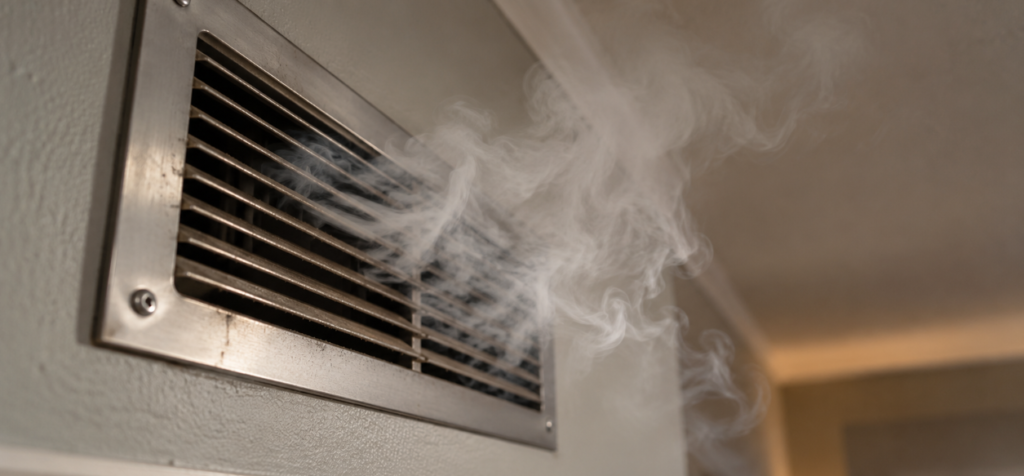
Your home’s heating, ventilation, and air conditioning
(HVAC) system can contribute to the spread of smoke damage.
If the system is running during a fire, it may draw smoke
particles into return vents and distribute them through ductwork to other
rooms. These particles can also collect on filters and inside certain HVAC
components.
This helps explain why homeowners sometimes notice smoke
odors in rooms far from where a fire occurred.
After a significant fire, the HVAC system should be
evaluated before being operated again. Depending on the extent of
contamination, professional cleaning or filter replacement may be necessary.
Smoke Moves Through Doorways, Cracks, and Wall Openings
Even with the HVAC system turned off, smoke can spread
naturally through a home.
Open doorways, staircases, hallways, and small gaps around
doors provide pathways for smoke to travel. Particles may also move through
openings around electrical outlets, plumbing, and other areas where air passes
between rooms or wall cavities.
Closing a bedroom door during a fire may reduce the amount
of smoke entering that room, but it doesn’t necessarily prevent contamination.
Soot and Smoke Residue Settle on Surfaces
As smoke moves through the home and begins to cool,
particles can settle on ceilings, walls, furniture, flooring, and personal
belongings.
Smoke can leave soot and other combustion residues on
surfaces. Depending on what burned, these deposits may appear as black or gray
dust, a sticky film, or subtle discoloration.
Not all smoke contamination is easily visible. Some
particles and other smoke-related compounds can leave behind lingering odors or
residue even when walls and furnishings look relatively clean.
Because smoke can affect areas beyond those with visible
fire damage, professional fire and smoke damage restoration often
involves inspecting multiple rooms to understand the full extent of the
problem.
Signs of Hidden Smoke Damage in Rooms Without Fire Damage
A room may look untouched after a fire but still have smoke-related contamination. Homeowners should pay attention to several common warning signs.
Persistent Smoke Odors
One of the most noticeable signs of hidden smoke damage is a lingering smoky or burnt smell.
These odors may be especially noticeable in closets, bedrooms, or rooms with upholstered furniture. Sometimes, the smell becomes stronger when someone moves cushions, opens drawers, or handles clothing.
Smoke odors can persist because certain compounds become trapped in porous materials. While an odor doesn’t necessarily indicate severe damage, it can suggest that additional cleaning or evaluation is needed.
Discoloration on Walls, Ceilings, and Vents
Smoke can leave deposits on surfaces as it travels throughout the home. Look for:
- Gray or black residue around air vents
- Yellowish or brownish discoloration on walls
- Dark deposits on ceilings or near doorways
- Fine dust or sticky residue on shelves and other surfaces
Some deposits are difficult to identify without careful inspection, particularly on darker surfaces or in poorly lit areas.
Smoke Residue on Furniture and Personal Belongings
Smoke particles can collect on household belongings even if they were never near the flames.
Curtains, bedding, rugs, upholstery, and clothing may retain odors. Electronics, books, decorative items, and stored belongings can also be affected.
For example, clothing stored inside a closed bedroom closet may develop a smoky smell even though the bedroom itself shows no visible fire damage.
Recognizing these signs early can help homeowners identify which rooms and belongings should be included in a smoke damage assessment.
Which Household Materials Are Most Vulnerable to Smoke Damage?
Different household materials react differently to smoke
exposure. Some surfaces can be cleaned relatively easily, while others absorb
odors or collect residues that require specialized treatment.
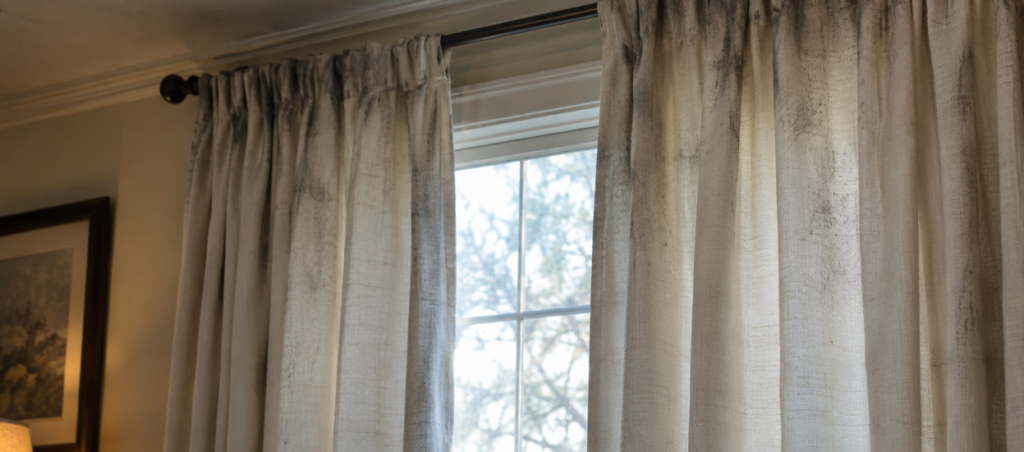
Carpets, Upholstery, Curtains, and Clothing
Porous materials are particularly vulnerable because their
fibers can trap smoke particles and odors.
Carpeting, upholstered furniture, curtains, mattresses, and
clothing may retain a smoky smell long after the air has cleared.
Ordinary washing or surface cleaning can sometimes address
light exposure, but more significant contamination may require professional
textile cleaning, upholstery treatment, or deodorization.
Drywall, Insulation, and Building Materials
Smoke residue can settle on painted walls, ceilings, trim,
and exposed building materials.
Depending on the type of smoke and severity of exposure,
cleaning may be sufficient for some surfaces. Other materials may require
additional treatment, sealing after proper cleaning, or replacement.
Insulation and other difficult-to-access materials can also
be affected if smoke enters concealed spaces.
A professional inspection helps determine whether
contamination is limited to surface deposits or extends into materials that are
more difficult to clean.
Electronics and Household Appliances
Electronics can be especially sensitive to smoke
contamination.
Small particles may enter computers, televisions,
appliances, and other electronic equipment through ventilation openings.
Certain combustion residues can also contribute to corrosion or interfere with
electrical components.
Homeowners should avoid turning on potentially smoke-damaged
electronics until they have been evaluated.
Fortunately, not everything exposed to smoke needs to be
discarded. Professional contents restoration services can help
determine which furniture, electronics, clothing, and personal belongings can
be cleaned and restored.
Can Smoke Damage Get Worse If It Is Not Cleaned Up?
Smoke damage may continue to create problems after the fire
has been extinguished, particularly when significant residue is left untreated.
Lingering odors:
Smoke-related compounds can remain in carpets, upholstery, and other porous
materials. These odors may persist even after the visible smoke has
disappeared.
Staining and
discoloration: Some types of soot can become more difficult to remove over
time or leave lasting discoloration on certain surfaces.
Corrosion:
Depending on the materials burned, smoke residue may contain compounds that
contribute to corrosion on metal surfaces and electronic components.
Indoor air quality
concerns: Residual soot and other particles may become airborne again when
contaminated materials are disturbed.
The severity of these problems varies considerably. A small
cooking fire that produces limited smoke may require only targeted cleaning,
while a larger structural fire can cause extensive contamination throughout the
property.
The important point is that the absence of visible flames or soot doesn’t always mean a room is unaffected.
What Should You Do If Smoke Has Spread to Other Rooms?
If you’ve experienced a house fire and suspect smoke has traveled into other parts of your home, a few precautions can help prevent additional damage.
- Make sure the property is safe to enter. Follow instructions from the fire department or other authorities before returning to affected areas.
- Document visible damage. Take photographs of soot deposits, discoloration, damaged belongings, and other signs of smoke exposure. This documentation may be helpful when filing an insurance claim.
- Avoid spreading soot particles. Don’t dry-brush contaminated surfaces or use a regular household vacuum to collect soot. These methods can redistribute fine particles and potentially make cleanup more difficult.
- Don’t operate potentially affected equipment. Avoid using smoke-damaged electronics or restarting HVAC equipment until it has been evaluated.
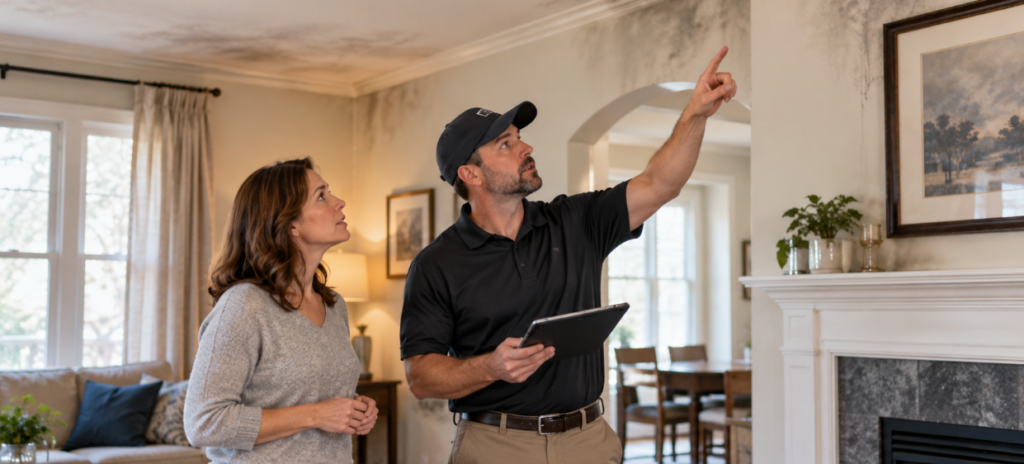
- Arrange a professional smoke damage assessment. Restoration specialists can inspect rooms beyond the fire’s origin and identify surfaces, materials, and belongings that may require attention.
For minor, limited deposits, appropriate cleaning methods may be sufficient once authorities permit reentry. Anyone handling fire residues should follow applicable protective-equipment and cleanup guidance. Widespread contamination should be professionally evaluated.
How Professionals Remove Smoke and Soot Damage Throughout a Home
Professional smoke damage restoration involves more than removing visible stains or covering up unpleasant odors.
The goal is to identify contaminated areas, remove residues where possible, restore affected belongings, and address materials that cannot be effectively cleaned.
Inspecting Rooms for Hidden Smoke Damage
The process begins with an assessment of the affected property.
Restoration technicians examine the rooms where the fire occurred as well as nearby spaces and other areas that may have been exposed to smoke.
They evaluate visible residue, odors, affected materials, and possible pathways for smoke movement. This helps determine the appropriate cleaning methods and scope of restoration.
Removing Soot and Cleaning Affected Surfaces
Once the extent of contamination is understood, technicians can begin removing soot and smoke residue from affected surfaces.
Depending on the materials and type of contamination, cleaning may involve specialized vacuums, chemical sponges, appropriate cleaning solutions, and other restoration equipment.
Furniture, clothing, rugs, and other personal items may also require professional cleaning. In more extensive cases, salvageable belongings can be inventoried, packed, and transported to a specialized facility for treatment.
Eliminating Lingering Smoke Odors
Smoke odor removal is an important part of the restoration process.
While air fresheners and household deodorizers may temporarily mask a smoky smell, they don’t necessarily remove the underlying contamination.
Professional smoke odor removal focuses on cleaning affected materials and applying suitable deodorization methods when needed.
Depending on the situation, restoration technicians may combine cleaning with HEPA filtration to capture airborne particles and suitable odor-control methods, such as activated-carbon filtration.
Repairing and Restoring Damaged Materials
Some smoke-damaged materials cannot be fully restored through cleaning alone.
In these situations, affected drywall, insulation, flooring, or other building components may need to be repaired or replaced.
A comprehensive restoration plan addresses any structural damage, smoke residue, odors, and affected contents rather than focusing only on the room where the fire started.
Frequently Asked Questions About Smoke Damage in Other Rooms
Can Smoke Damage Occur in a Room With the Door Closed?
Yes. A closed door can reduce smoke exposure, but it doesn’t create an airtight seal. Smoke particles can move through gaps around doors, ventilation systems, and other openings. A closed room may still develop soot deposits or lingering smoke odors.
Can Smoke Damage a House Without Visible Soot?
Yes. Some smoke-related particles and residues are difficult to see. A room may appear clean while fabrics, furniture, or other materials retain smoky odors. Professional evaluation can help determine whether cleaning is needed.
Does Smoke Damage Eventually Go Away on Its Own?
Although airborne smoke may dissipate with ventilation, residues and odors trapped in household materials can persist. Some light odors may diminish over time, but significant contamination typically requires cleaning to address the underlying source.
Will Homeowners Insurance Cover Smoke Damage in Rooms Untouched by Fire?
Many homeowners insurance policies include coverage for qualifying fire and smoke damage, even when affected rooms were not directly exposed to flames. However, coverage depends on the policy, the cause of the fire, and the circumstances of the loss. Document the affected rooms and belongings and speak with your insurance provider about available coverage.
Professional Smoke Damage Restoration in Troy and Oakland County
Smoke damage doesn’t always stop where the flames end. Even rooms that appear untouched by a house fire can be affected by soot particles, lingering odors, and smoke residue.
Identifying the full extent of contamination is an important part of restoring your home and protecting belongings that may still be salvageable.
Emergency Restoration provides professional fire and smoke damage restoration in Troy, Oakland County, and surrounding areas. Our experienced restoration team can assess smoke damage, clean affected surfaces and belongings, address odors, and complete necessary repairs.
If smoke has spread beyond the room where a fire occurred, contact Emergency Restoration or call (248) 299-4500 for 24/7 emergency assistance.