
Non Emergency
Contact Form
Summer Fire & Smoke Risk in Michigan Homes: Grills, Fire Pits & Hidden Hazards
Michigan summers are made for backyard living, grilling on
the deck, gathering around the fire pit, setting off fireworks on the Fourth,
and spending long evenings outside with family and friends. But the same
seasonal habits that make summer enjoyable can also increase the risk of fire
and smoke damage to your home.
Outdoor cooking, open flames, consumer fireworks, and even a
few overlooked indoor appliances create conditions that fire departments and
restoration professionals see play out every summer across Oakland County and
Southeast Michigan. Understanding where those risks actually come from, and
what to do if something goes wrong, can make a real difference.
Emergency Restoration is based in Troy and provides fire
and smoke damage restoration throughout Oakland County and Southeast Michigan,
with 24/7 response for soot removal, smoke odor elimination, structural
repairs, contents cleaning, and insurance support.
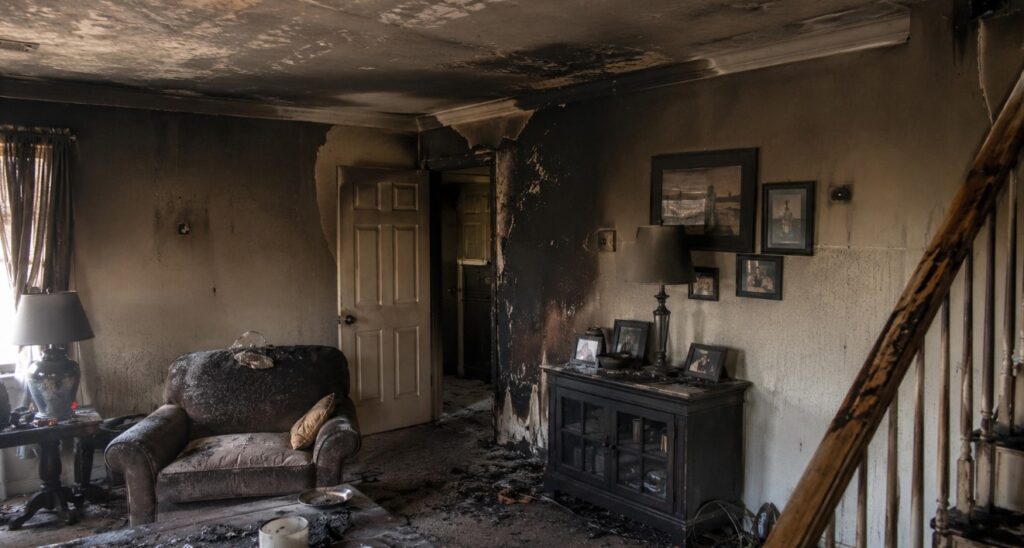
Common Outdoor Fire Causes During Michigan Summers
Grill Fires
Home grilling fires rise sharply during warmer months and
peak in July, followed by June, May, and August. According to the National Fire
Protection Association, U.S. fire departments responded to an annual average of
12,141 home fires involving grills, hibachis, or barbecues between 2020 and
2024.
Most grill fires are preventable. The most common causes
include grease buildup, inadequate clearance from the home, unattended cooking,
and propane connection issues. Whether you’re using gas or charcoal, these
habits reduce your risk significantly:
- Keep
the grill at least 10 feet from your home’s siding, deck railings,
overhangs, and garage.
- Clean
grease trays and cooking grates regularly, accumulated grease is the
leading cause of grill flare-ups.
- Check
propane hoses and connections before each use.
- Never
grill inside a garage, covered porch, or any enclosed space.
- Keep a
working fire extinguisher within reach.
- Stay
with the grill while it’s lit.
Fire Pits and Bonfires
Fire pits have become a backyard staple across Michigan, but
portable fire bowls and wood-burning pits carry real risk, especially when
embers travel into dry grass, mulch, patio cushions, or nearby wood structures.
Tips to keep backyard fires from becoming a problem:
- Place
fire pits on a non-combustible surface, away from decking, fences, and
low-hanging branches.
- Keep
flames small and controlled, particularly during dry stretches.
- Avoid
burning during windy conditions, even a light breeze can carry sparks
farther than expected.
- Keep a
bucket of water, sand, or a fire extinguisher nearby.
- Never
go inside until embers are fully extinguished and cool to the touch.
Fireworks
Michigan allows consumer fireworks on specific dates in
communities that permit them by ordinance, including June 29 through July 4
until 11:45 p.m., with additional date-specific allowances for other holidays.
Always check your local municipal ordinance before using consumer fireworks,
Troy, Birmingham, Royal Oak, and other Oakland County communities may have
additional restrictions.
When using fireworks legally:
- Use
them only in open areas with clear distance from structures, vehicles, dry
grass, mulch, and sheds.
- Never
attempt to relight a dud.
- Keep
water nearby at all times.
- Soak
spent fireworks thoroughly before disposing of them.
- Keep
children and pets away from the launch area.

Hidden Indoor Fire Hazards Homeowners Often Miss
Outdoor risks get the attention in summer, but some of the
most serious hazards are inside the home, and easy to overlook.
Dryer Vents and Lint Buildup
Dryer fires are one of the most underappreciated household
hazards. Lint accumulation restricts airflow, causes the dryer to overheat, and
can ignite, often with little warning. The Consumer Product Safety Commission
estimates approximately 15,500 clothes dryer fires occur annually in the United
States.
The warning signs are easy to miss: clothes taking longer
than usual to dry, a burning smell during or after a cycle, laundry that comes
out unusually hot, or visible lint accumulating around the exterior vent
opening. If you notice any of these, stop using the dryer until the vent is
inspected.
Good habits:
- Clean
the lint trap after every single load, without exception.
- Have
the dryer vent duct professionally cleaned at least once a year.
- Never
run the dryer when you’re asleep or away from home.
Overloaded Extension Cords and Outdoor Power Use
Summer entertaining means more outdoor electrical demand,
patio string lights, outdoor fans, inflatable pools, speakers, and power tools
all pulling from extension cords that may not be rated for the load. Overloaded
or damaged cords can overheat and ignite nearby combustibles without much
visible warning.
- Use
only outdoor-rated extension cords for outdoor use.
- Avoid
daisy-chaining multiple extension cords together.
- Replace
any cord with visible damage, cracking, or exposed wiring.
- Don’t
run cords under rugs, beneath doors, or under patio furniture where heat
can’t dissipate.
- Unplug
outdoor cords when not in use.
Candles, Mosquito Torches, and Citronella Flames
Summer gatherings often mean candles on the table and
citronella torches along the patio edge. These are easy to forget about
mid-party, and proximity to paper plates, napkins, fabric cushions, and
curtains makes them a meaningful ignition risk.
- Keep
open flames away from any paper, fabric, or lightweight combustibles.
- Use
stable, weighted holders, not improvised ones.
- Never
leave candles or torches unattended, even briefly.
- Consider
battery-powered flameless alternatives for areas where guests or children
are moving around.
Kitchen and Small Appliance Risks
Summer entertaining means more cooking, more countertop
appliances running simultaneously, and more distractions. Air fryers, toaster
ovens, slow cookers, coffee makers, and countertop grills can all pose risk
when left unattended or when outlets are overloaded. Keep appliances away from
flammable materials, ensure proper ventilation, and unplug them when not in
use.
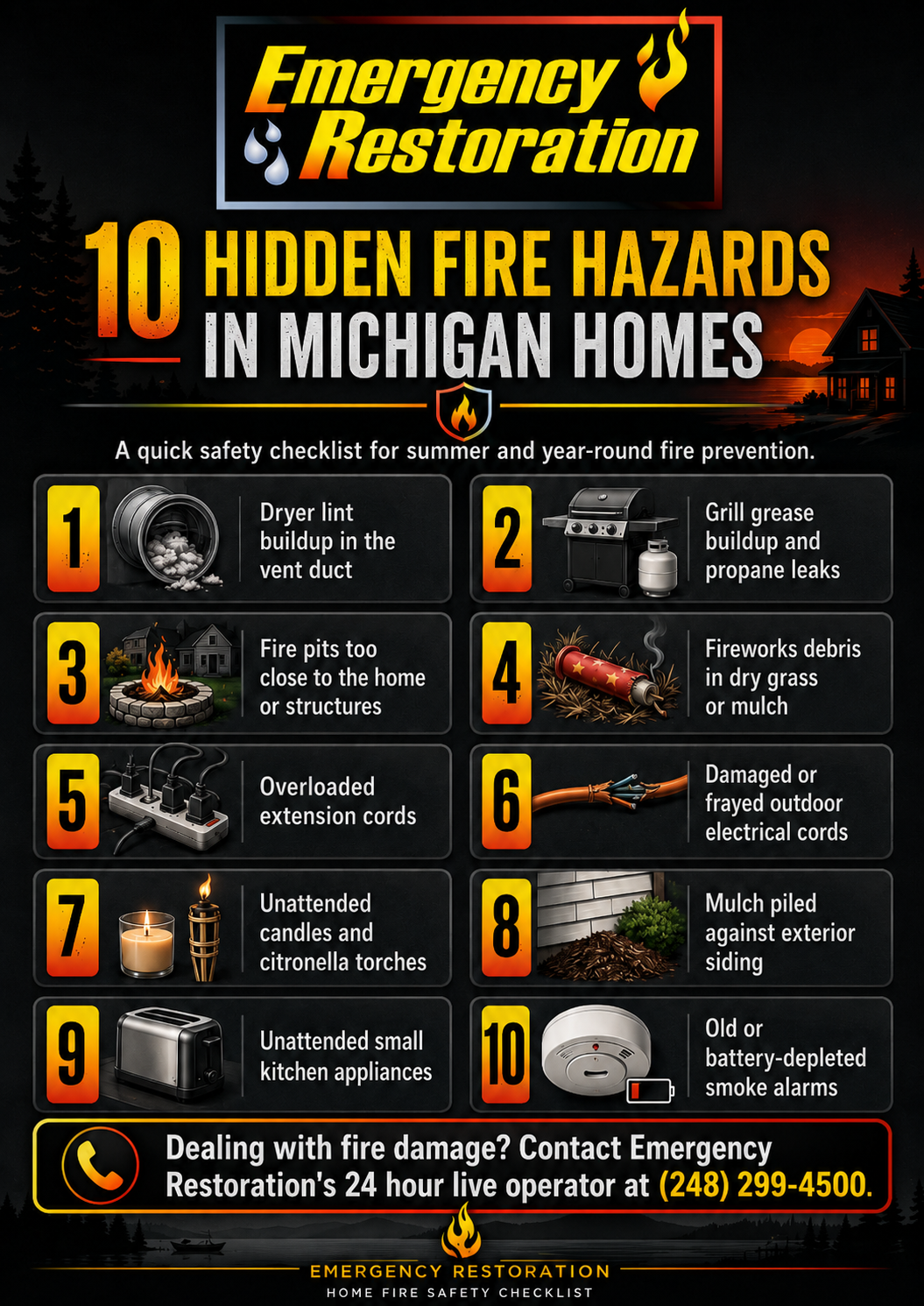
Download Our Fire Hazards Infographic
Keep your family safe by keeping a copy of our hidden fire hazard guide available in your home. Just click the image for a full sized version, then ctrl+click, or right click and choose save image file for your own copy.
Fire-Safe Habits Every Michigan Homeowner Should Follow
Building a few consistent habits goes a long way toward
preventing the situations that lead
to fire and smoke damage in the first place.
- Test
smoke alarms monthly and replace batteries annually.
- Keep
fire extinguishers in the kitchen, garage, basement, and near outdoor
cooking areas.
- Create
and practice a family fire escape plan, not just once, but regularly.
- Clean
grill grease traps and dryer lint screens as a routine, not an
afterthought.
- Keep
mulch, dry leaves, brush, and firewood stored away from the home’s
exterior.
- Store
propane tanks outdoors, upright, and away from heat sources.
- Avoid
burning, indoors or out, during windy or prolonged dry conditions.
- Unplug
outdoor extension cords and unused small appliances when you’re done.
- Keep
children and pets clear of grills, fire pits, and fireworks at all times.
- Check
local municipal ordinances before using consumer fireworks each summer
holiday.
Michigan summers also bring the threat of lightning strikes,
which can cause fires and structural damage even when no outdoor cooking is
involved. If your home experiences storm
or lightning-related damage, Emergency Restoration responds 24/7 to wind,
lightning, hail, and other storm-related property damage as well.
What to Do After Fire or Smoke Damage
Prevention works most of the time. When it doesn’t, how you
respond in the first hours matters.
Make Sure Everyone Is Safe First
Evacuate immediately if there is active fire, heavy smoke,
or any structural concern. Call 911 for active emergencies. Do not re-enter the
home until fire officials have cleared it as safe.
Avoid Touching Soot or Smoke-Damaged Surfaces
This is one of the most common mistakes homeowners make
after a fire. Soot is acidic and spreads easily, touching it, wiping it, or
walking through it tracks it to unaffected areas and makes restoration harder
and more expensive. Leave soot-covered surfaces alone until a professional has
assessed the damage.
Document the Damage
If it’s safe to do so, photograph and video every affected
area before anything is moved or cleaned. Keep receipts for any emergency
expenses, hotels, food, board-up services, and notify your insurance carrier as
soon as possible.
Call a Fire and Smoke Damage Restoration Company
Professional restoration companies bring the equipment and
expertise that effective fire and smoke cleanup requires: air scrubbers, ozone
machines, CO2 blasting, ultrasonic cleaning tanks, and smoke odor removal
systems. Emergency Restoration handles both the structural and contents side of
fire losses, including pack-out services, soot removal, smoke odor elimination,
and insurance claim support.
When Smoke Damage Reaches Your Belongings
Smoke doesn’t stay in the room where the fire started. It
travels through air ducts, open doorways, wall cavities, and porous materials,
leaving residue and odor on furniture, clothing, documents, appliances,
electronics, and personal keepsakes far from the source of the fire.
Content
restoration after fire or smoke damage covers cleaning and restoring
furniture, textiles, and other personal belongings that have been affected. For
smaller losses, cleaning can often be done on-site. For larger or more complex
losses, a pack-out service removes items to a secure facility for cleaning,
drying, and storage during the restoration process.
Electronics deserve special attention. Smoke particulate can
penetrate fans, vents, and circuit boards, and corrosive soot accelerates
damage quickly. Specialized electronics
restoration after smoke damage can recover, repair, or replace residential
and business electronics, including TVs, computers, appliances, and other
equipment, that might otherwise be written off.
Fire Damage Help in Troy, Oakland County, and Southeast Michigan
Emergency Restoration is based in Troy and serves homeowners
and businesses throughout Oakland County and Southeast Michigan. Whether the
loss is from a grill fire, a dryer fire, a candle, or a more significant
structural fire, the company responds 24 hours a day, seven days a week.
Service
areas include Troy, Birmingham, Bloomfield Hills, Berkley, Pontiac,
Rochester Hills, Royal Oak, Sterling Heights, and Utica, as well as the broader
Metro Detroit area. If you’re not sure whether your community is covered, call,
response coverage is extensive across Southeast Michigan.
Local service pages:
- Troy, MI
- Pontiac, MI
- Rochester
Hills, MI
- Birmingham, MI
- Bloomfield
Hills, MI
- Sterling
Heights, MI
- Utica, MI
- Berkley, MI
Related Reading
If you found this useful, these articles cover related risks
that Michigan homeowners face in the warmer months: