
Non Emergency
Contact Form
Why Summer Dryer Vent & HVAC Maintenance in Troy Prevents Winter Fire and Water Damage
Most homeowners in Troy and across Oakland County aren’t thinking about dryer vent cleaning or HVAC maintenance in July. The AC is running, the furnace is off, and the dryer is just doing its job. Easy to overlook.
But summer is the single best window to address the two household maintenance items most likely to cause fire or water damage once Michigan winter locks in: a clogged dryer vent and a neglected HVAC system. Contractors have availability, the weather cooperates for inspections, and you have months to find and fix problems before the cold season amplifies them.
Here’s what’s at stake, and exactly what to do about it.

The Link Between Clogged Dryer Vents and House Fires
The U.S. Fire Administration estimates roughly 2,900 house
fires per year are caused by clothes dryers, with failure to clean
listed as the leading contributing factor. For Michigan homeowners running gas
dryers through long, sealed winters, that risk is real.
The fire chain is straightforward: every laundry load pushes
lint into the dryer exhaust duct. The lint trap catches some of it, but a
significant portion travels past the screen into the duct itself, slowly
coating the duct walls. As lint accumulates, airflow restricts. The dryer runs
hotter and longer to compensate. Eventually, superheated exhaust air ignites
the compacted lint inside the duct, and the fire travels into the wall cavity.
Why winter makes it worse: In summer, an unusual
smell or a clothes-taking-two-cycles-to-dry pattern is noticeable. In a sealed
winter home, those early warning signs are easier to dismiss or simply not
catch.
What to inspect this summer:
- Pull
the dryer from the wall and check the flexible connector for kinks, tears,
or accordion-style plastic (replace with rigid metal duct, plastic traps
lint and is a fire risk)
- Verify
the exterior vent hood damper opens and closes freely, and isn’t blocked
by debris, frost damage, or bird nests from last season
- Vacuum
behind and inside the dryer cabinet, not just the screen
- Schedule
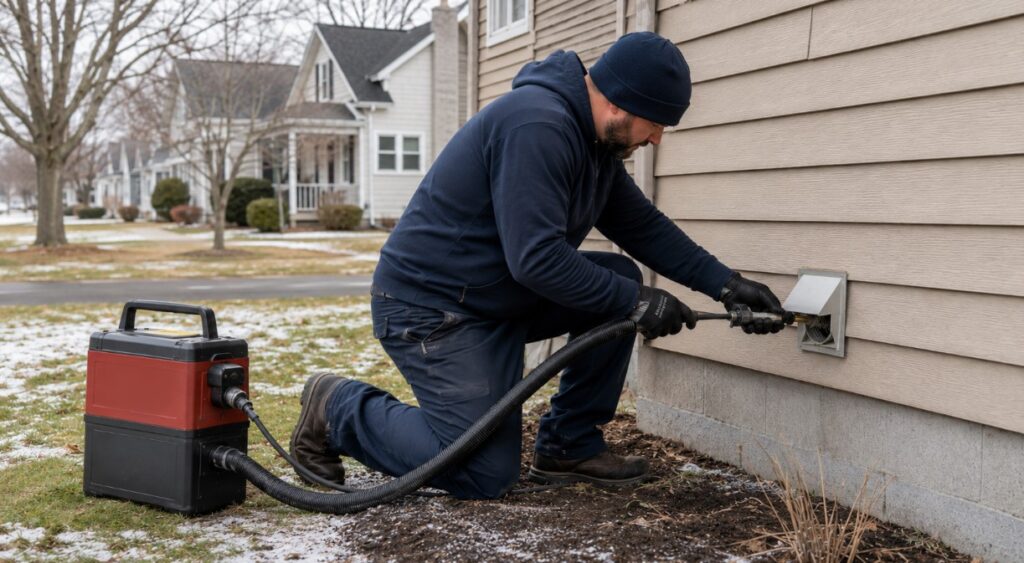
professional dryer vent cleaning in Troy, MI, annual service is
recommended by most major dryer manufacturers and fire safety
organizations, and is non-negotiable for ducts longer than 8–10 feet or
those with multiple turns
Ducts terminating through the roof (common in two-story Troy
homes) require professional service. Consumer brush kits rarely reach the full
duct length, leaving lint pockets mid-run.
If a dryer vent fire does occur, the damage can spread
quickly into wall cavities, insulation, and adjacent rooms. Learn what fire
damage restoration looks like and what to expect from the recovery process.
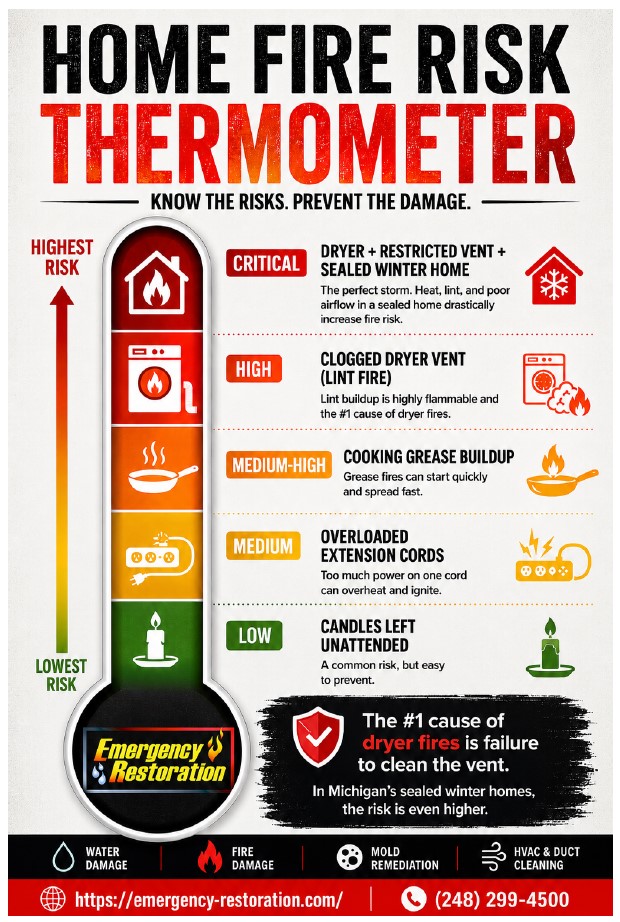
Download Our Home Fire Risk Thermometer
Need a reminder around the home? We’ve got you covered. Click the image below to download a copy for yourself.
How HVAC Leaks Cause Mold and Ceiling Stains
This one surprises homeowners, because the connection isn’t
intuitive. A central air conditioning system removes moisture from indoor air
as it cools, in a typical Michigan summer, that means gallons of condensation
per day, all of which collects in a drain pan beneath the air handler and exits
through a condensate drain line.
When that drain line clogs, which happens routinely as
algae, dust, and debris accumulate, the pan fills and overflows. Depending on
where your air handler sits, that overflow can saturate drywall, ceiling
framing, insulation, or subfloor material below. The result looks exactly like
a roof leak or a plumbing failure. Many homeowners spend money on roof repairs
and keep having the same problem because the actual source, the air handler
above, was never addressed.
Worse, standing moisture from a blocked condensate drain
creates ideal mold conditions. HVAC-related mold growth tends to be slow and
hidden, by the time you see ceiling discoloration or smell something musty from
a supply vent, a colony has often been growing inside the wall cavity or duct
insulation for weeks.
What HVAC maintenance in Oakland County should include before fall:
- Flush
the condensate drain line with a diluted bleach solution (a standard
preventive step)
- Inspect
the drain pan for standing water, rust staining, or visible slime, any of
these signals a drainage problem
- Check
the air handler cabinet for rust, staining, or soft/wet insulation panels
- Inspect
accessible duct connections at the air handler for separations or
disconnections that allow conditioned air to bleed into unconditioned
spaces
- Replace
the air filter and set a calendar reminder to do it again in October
before heating season begins
- Schedule
a certified HVAC technician to inspect the heat exchanger, a cracked heat
exchanger is a carbon monoxide risk that cannot be identified without
professional equipment
HVAC condensate overflow is one of the more commonly
misdiagnosed sources of water damage in Oakland County homes. Our
water damage restoration team can assess, extract, and dry the
affected area regardless of the source.
If you’re already seeing ceiling stains or noticing musty odors from supply vents, it’s worth having a mold assessment done before fall. Our mold remediation team can determine whether active growth is present and what’s required to address it.
Why Trust This Advice?
This guide comes from the team at Emergency Restoration — a Troy, Michigan-based restoration company that responds to exactly the fire and water damage events this article is designed to help you prevent.
- 20+ Years in Business
- Serving Troy and Oakland County homeowners since the early 2000s
- IICRC Certified & Licensed
- IICRC certified technicians. Licensed, insured, and bonded building contractor
- Local Service Area
Troy, Birmingham, Rochester Hills, Bloomfield Hills, and greater Oakland County
Why Michigan’s Freeze-Thaw Cycle Amplifies Both Risks
Local homeowners face a compounding factor that makes summer
maintenance even more important: Michigan’s freeze-thaw cycle.
A condensate drain line that’s partially obstructed doesn’t
necessarily fail dramatically in summer, it just drains slowly. In fall, that
slow drain leaves residual moisture in the line. When the first hard freeze
arrives, that moisture freezes in place and fully blocks the line. The next
warm HVAC cycle, typically in late October, floods the drain pan.
The same dynamic applies to dryer vents. A duct that was 60%
restricted with lint in October can become fully sealed by February: warm,
moist exhaust air freezes on contact with the existing restriction, packing the
blockage tighter with each cycle. The dryer keeps running. The heat has nowhere
to go.
This is exactly why summer is the ideal maintenance
window: no cold weather complicating access, contractors have more
scheduling flexibility, and you have enough runway to address any problems
before the season turns.
Summer Maintenance Checklist for Troy and Oakland County Homeowners
Use this as a practical guide to work through before
September.
Dryer Vent:
- Inspect
and replace the flexible connector hose if it’s the accordion-style
plastic type
- Clean
the exterior vent hood and verify the damper opens and closes freely
- Schedule
annual dryer vent cleaning, particularly if it’s been over 12 months, you
run large or heavy loads, or your duct has multiple 90° bends
HVAC System:
- Flush
the condensate drain line
- Inspect
the drain pan for standing water or staining
- Replace
the air filter
- Test
the furnace to confirm it ignites cleanly, don’t wait until the first cold
night to find out it doesn’t
- Schedule
professional HVAC maintenance in Oakland County to include heat exchanger
inspection, refrigerant level check, and blower motor assessment
General Home Fire and Water Risk:
- Test
all smoke detectors and carbon monoxide detectors; replace batteries
- Inspect
roof flashings and attic ventilation while you can safely work outside
- Check
the water heater for corrosion, dripping, or sediment rumbling, a failing
water heater that gives out in January creates fast, serious water damage
Energy Savings and Safety Benefits of Keeping Up
Proactive maintenance isn’t just about preventing the worst
case, it has real, measurable upside:
- A
clean dryer vent reduces cycle time by 25–30%, extending appliance life
and reducing energy consumption
- A
flushed condensate drain and clean evaporator coil improve AC efficiency
throughout the cooling season
- A
properly inspected heat exchanger eliminates a carbon monoxide risk that
has no visible symptom and no smell
- Combined,
professional dryer vent and HVAC service typically runs $150–$400,
compared to thousands in fire or water damage restoration costs when
something goes wrong
Preventing home fires in Michigan isn’t complicated. The
barrier is almost never knowledge, it’s just that this maintenance is easy to
defer. Summer removes most of the logistical excuses.
When Maintenance Wasn’t Enough – We’re Here
Diligent maintenance dramatically lowers the odds of a
disaster, but doesn’t eliminate them. Component failures happen. Fires spread
from adjacent structures. A previous owner’s deferred maintenance creates
problems years later.
If you’re dealing with fire damage from a dryer vent
ignition, HVAC-related water damage, or mold discovered during a summer
inspection, Emergency Restoration provides 24/7 emergency response throughout Southeast
Michigan. We’re IICRC-certified, work with all major insurance carriers, and
have been restoring homes in this region for more than 20 years.
See our case studies for
real examples of how we’ve helped Oakland County homeowners recover from fire,
water, and mold damage.
Call (248) 299-4500 any time. Emergency response is
immediate. Non-emergency assessments and insurance questions are handled the
same day.
FAQ
Q: How often should I have my dryer vent cleaned? A:
Most manufacturers and fire safety organizations recommend annual professional
cleaning. If you run daily loads, frequently dry bulky items like comforters,
or your duct has multiple bends, consider cleaning every 6 months.
Q: What are the signs that a dryer vent needs cleaning?
A: Clothes taking more than one cycle to dry, the dryer running unusually hot
to the touch, a burning or musty smell during operation, and lint visible
around the exterior vent hood are all indicators of restriction and potential
fire hazard.
Q: Can HVAC condensate overflow cause mold inside walls?
A: Yes. Overflow from a clogged condensate drain can saturate drywall and
insulation with no visible surface sign initially. Musty odors from supply
vents or unexplained ceiling discoloration are common early indicators.
Q: Does Emergency Restoration handle HVAC-related water
damage? A: Yes. Regardless of source, condensate overflow, burst pipes, or
appliance failure, our water damage restoration team assesses, extracts, dries,
and remediates to IICRC standards throughout Troy and Oakland County.
Q: What’s the risk of skipping furnace maintenance before winter in Michigan? A: A cracked heat exchanger is the most serious overlooked risk, it allows carbon monoxide to enter living spaces silently. Beyond safety, an unmaintained furnace is also more likely to fail on the coldest days of the year when HVAC contractors have the least availability.